An Overview of the Cell
Before the chapter dives into organelle-by-organelle anatomy, NCERT pauses for a tour of the whole territory — a page of comparisons that quietly supplies a third of the chapter’s exam questions. Two cells you have already met set up the frame: the onion cell, a typical plant cell, has a distinct cell wall as its outer boundary and, just within it, the cell membrane; the human cheek cell has only an outer membrane as the delimiting structure of the cell. Inside each is a dense, membrane-bound structure — the nucleus — containing the chromosomes, which contain the genetic material, DNA.
That membrane-bound nucleus is the great fork in the tree of life:
Cells that have a membrane-bound nucleus are called eukaryotic; cells that lack a membrane-bound nucleus are prokaryotic.
The Cytoplasm: the Main Arena
In both kinds of cell, a semi-fluid matrix called the cytoplasm occupies the volume of the cell, and it is here — not in the organelles floating in it — that NCERT places the action: the cytoplasm is the main arena of cellular activities, where various chemical reactions occur to keep the cell in the ‘living state’. The eukaryotes then take compartmentalisation further. Besides the nucleus, their cells contain other membrane-bound organelles — the endoplasmic reticulum, the Golgi complex, lysosomes, mitochondria, microbodies and vacuoles — each a walled workshop running its own chemistry. Prokaryotic cells lack such membrane-bound organelles; that single sentence is half of the prokaryote–eukaryote contrast.
Two famous structures are not membrane-bound, and the exam circles them precisely because of it:
- Ribosomes — non-membrane-bound organelles found in all cells, prokaryotic and eukaryotic. Within the cell they occur not only free in the cytoplasm but also inside two organelles — the chloroplasts (in plants) and the mitochondria — and on the rough ER. If a question asks what a prokaryote and a chloroplast share, the answer is 70S ribosomes, and you will meet them properly on the ribosome page.
- Centrosome — a non-membrane-bound organelle of animal cells that helps in cell division; its centrioles get a full page later in the series.
The Size Ladder
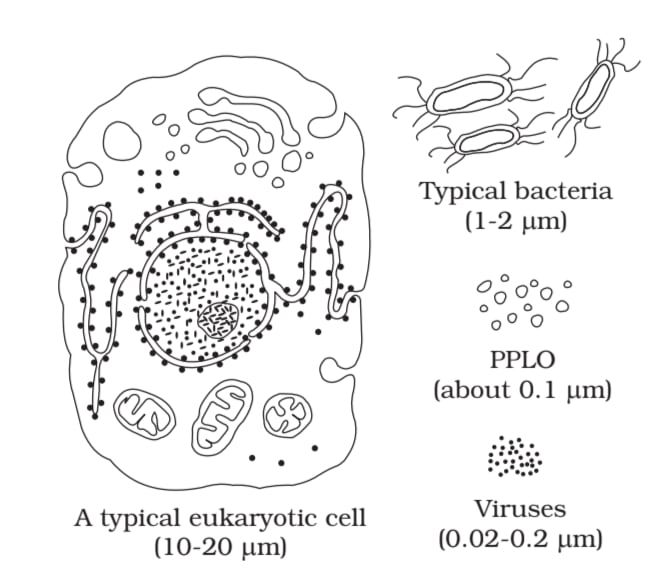
Cells differ greatly in size, shape and activities. The spread is enormous, and NCERT’s numbers are worth memorising as a ladder:
| Cell | Size |
|---|---|
| Mycoplasmas (the smallest cells) | only 0.3 µm in length |
| Bacteria | 3 to 5 µm |
| Human red blood cell | about 7.0 µm in diameter |
| Largest isolated single cell | the egg of an ostrich |
| Longest cells | nerve cells |
Three placements do most of the exam’s work. First, mycoplasma is the smallest cell — smaller than some viruses are long, and the reason “smallest living cell” is a one-mark gift. Second, “largest isolated single cell” is the ostrich egg, not a nerve cell — the nerve cell is only the longest. Third, size and complexity are unrelated: a 7 µm red blood cell gives up its nucleus to carry more oxygen, while a 20 µm plant mesophyll cell runs a photosynthesis factory. Between them sits the whole subject of this chapter.
The Shape Problem
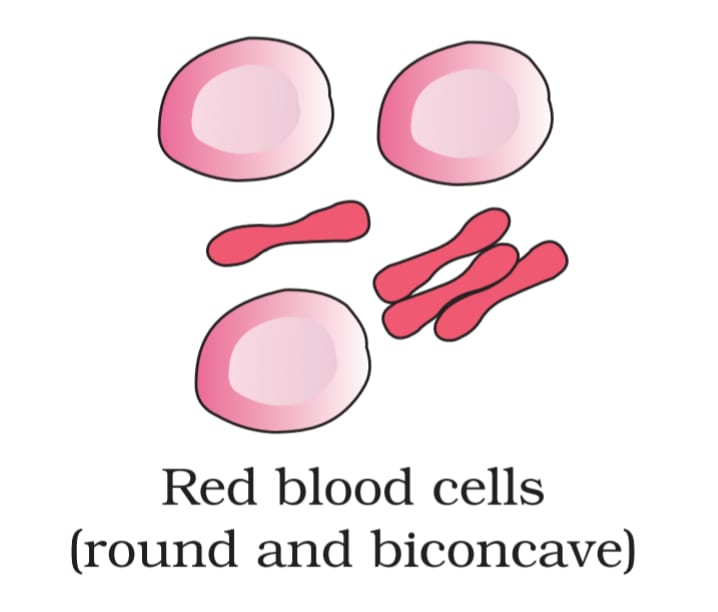
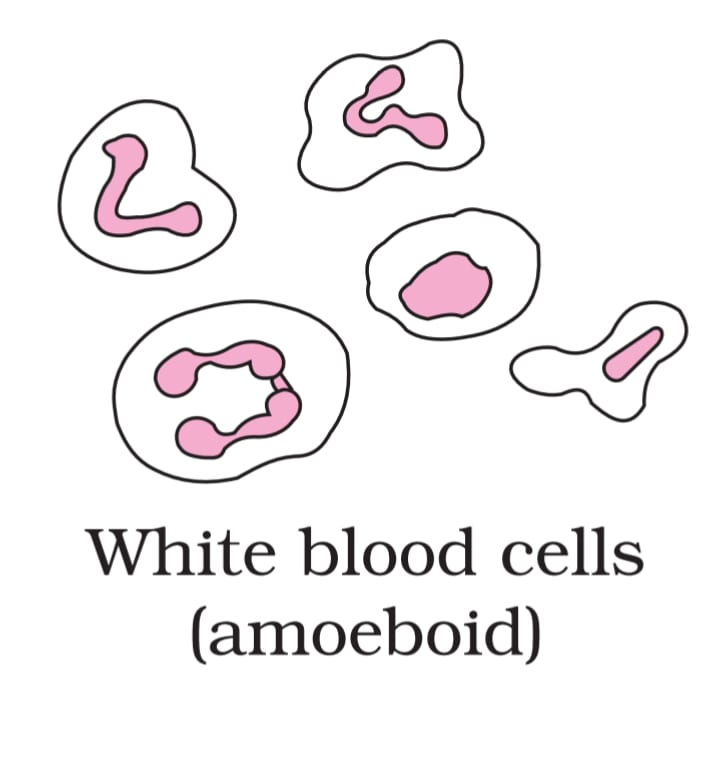
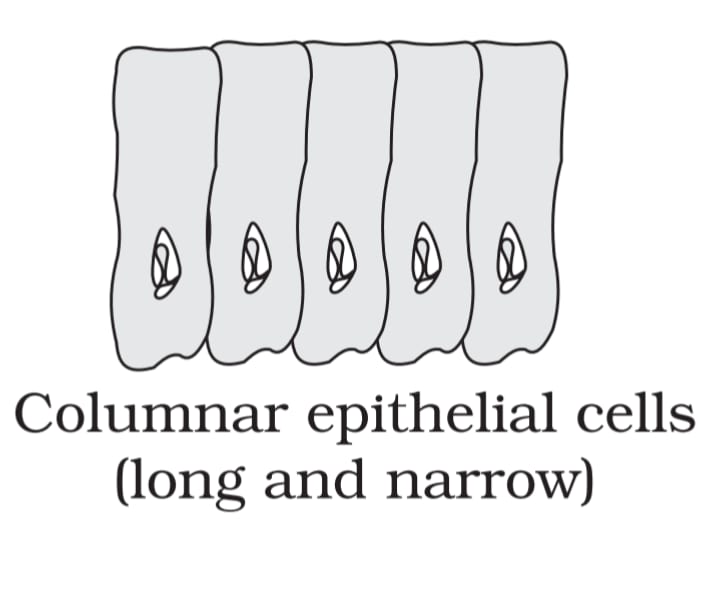
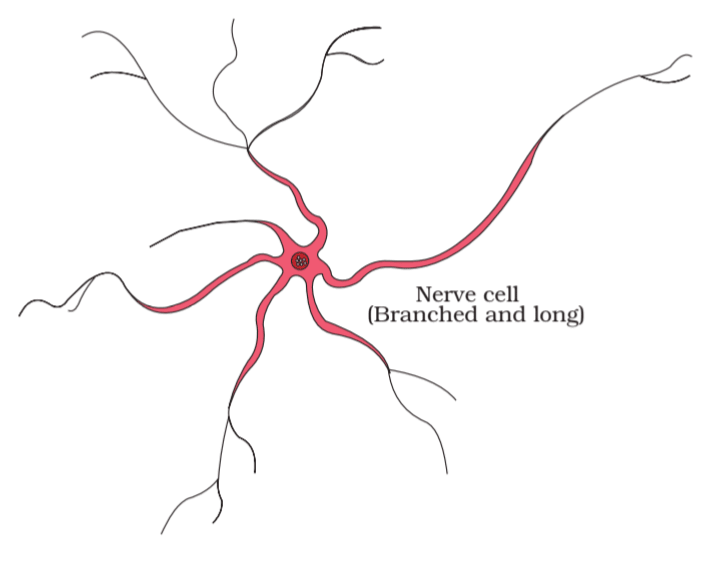
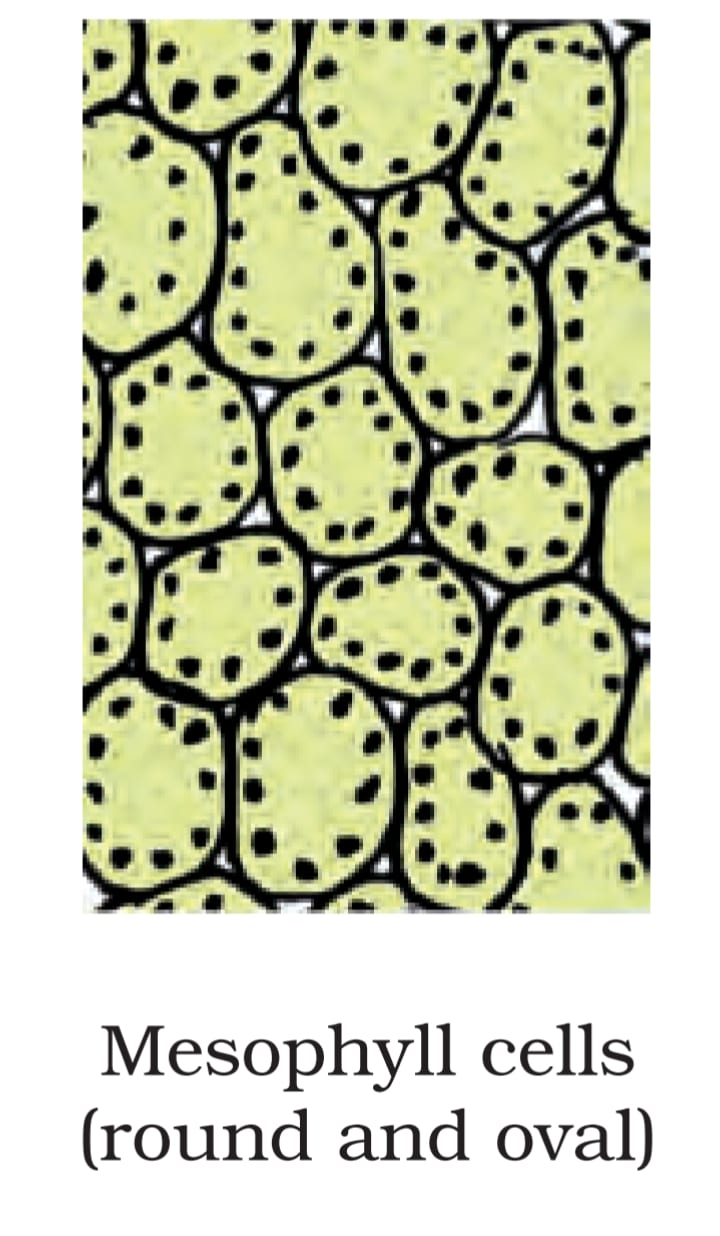
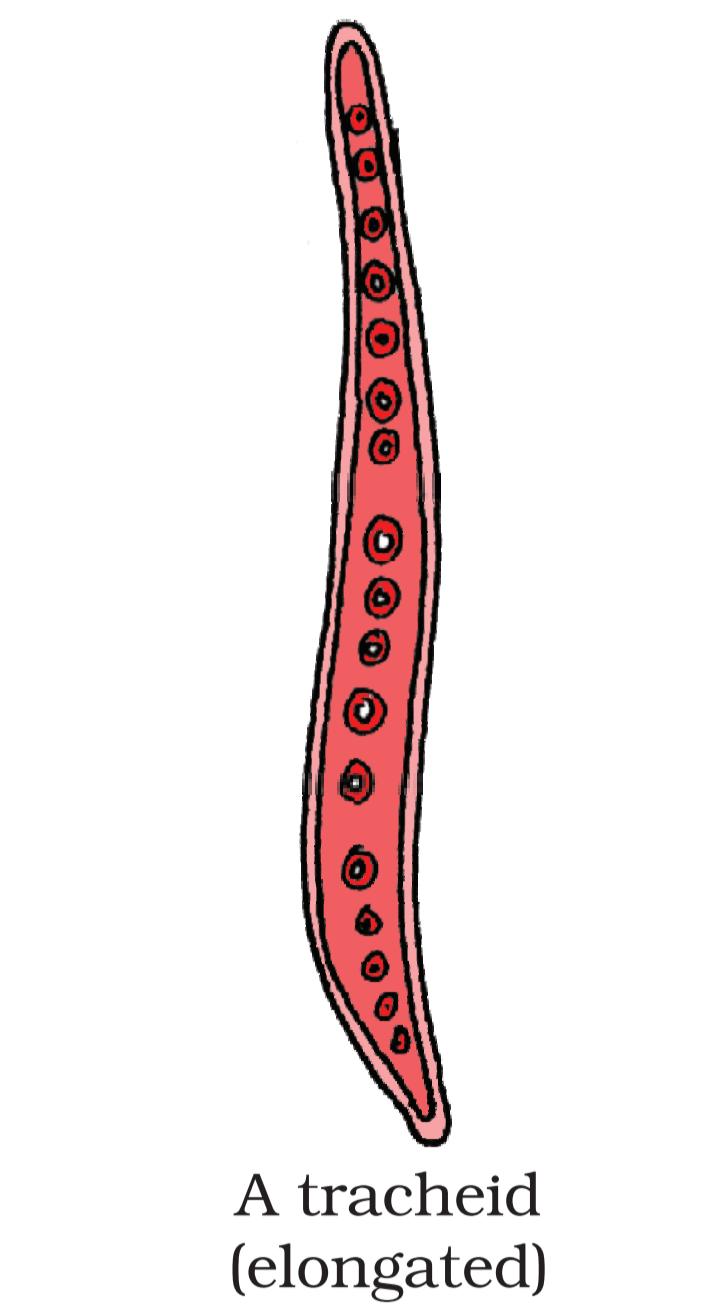
Shape follows function. Cells may be disc-like, polygonal, columnar, cuboid, thread-like or even irregular — NCERT’s figure lines them up: red blood cells round and biconcave to slip through capillaries; white blood cells amoeboid, so they can crawl toward infection; columnar epithelial cells long and narrow to line and absorb; nerve cells branched and long to carry signals across metres of body; mesophyll cells round and oval, packed with chloroplasts; tracheids elongated, to stack into water pipes. A cell’s shape is not decoration; it is the first line of every function-based question.
The Vocabulary the Exam Keeps Separate
The current NCERT print barely mentions the classical terms, but Allen and NEET use them constantly, so fix them now (goes beyond the current NCERT print — standard Allen/NEET material):
- Protoplasm — the entire living content of a cell: cytoplasm + nucleus. The old term from which “protoplasm is the physical basis of life” descends.
- Protoplast — a plant cell minus its cell wall. (Plant cell − wall = protoplast; protoplast − membrane = protoplasm.)
- Cytoplasm — the region between the nucleus and the cell membrane; it divides into cytosol, the liquid matrix itself, and the trophoplasm (or deutoplasm), the part carrying organelles and non-living inclusions.
Keep the pairs straight — protoplast/protoplasm and cytosol/cytoplasm are classic distractor pairs — and note that “cytoplasm occupies the volume of the cell” applies to both prokaryotes and eukaryotes; the organelles are what differ.
Key Points to Remember
- Onion cell: wall outside, membrane within; cheek cell: membrane only. Membrane-bound nucleus → eukaryote; no membrane-bound nucleus → prokaryote.
- Cytoplasm: semi-fluid matrix in both cell types; the main arena of cellular activities.
- Membrane-bound organelles (ER, Golgi, lysosomes, mitochondria, microbodies, vacuoles) — eukaryotes only. Non-membrane-bound: ribosomes (all cells), centrioles (animal cells).
- Smallest cell: mycoplasma, 0.3 µm; bacteria 3–5 µm; human RBC ≈ 7.0 µm; largest isolated single cell: ostrich egg; longest: nerve cell.
- Protoplasm = cytoplasm + nucleus; protoplast = plant cell without wall; cytosol = the liquid matrix of the cytoplasm.
Solved Problem
Question (NCERT exercise 9) — Multicellular organisms have division of labour. Explain.
Show solutionHide solution
A multicellular body is a colony of cells that have renounced the generalist life: no single cell can do everything well, so cells specialise and the work is divided among them. Groups of cells performing a common function by a common plan become tissues (muscle for movement, blood for transport, xylem for conduction); tissues combine into organs, organs into organ systems. Each specialised cell loses something — a mammalian red blood cell even discards its nucleus to carry more haemoglobin — and depends on the rest of the body for what it can no longer do. The single-celled Amoeba must be its own gut, lung and kidney; a human delegates each job to a dedicated cell type, which is why a multicellular organism can grow large, live long and run many jobs simultaneously. Division of labour is the why behind every tissue you will meet in the anatomy chapters.
Practice (NEET pattern) — Arrange in ascending order of size: typical eukaryotic cell, human red blood cell, mycoplasma, typical bacterium. And which single cell is the largest isolated cell known?
Show solutionHide solution
Mycoplasma (0.3 µm) < bacterium (3–5 µm) < human RBC (≈ 7.0 µm) < typical eukaryotic cell (10–20 µm). Note how narrow the bacterial–RBC gap is — a red blood cell is barely larger than a bacterium, which is why it squeezes through capillaries in single file. The largest isolated single cell is the egg of the ostrich; “isolated” matters, because a nerve cell is longer but not larger in volume.
Up Next
The fork in the road leads first to the small side. Prokaryotic cells — bacteria, blue-green algae, mycoplasma — have no organelles and no nuclear envelope, yet manage cell walls, plasmids and a quirky membrane fold called the mesosome. Everything a prokaryote does, it does with less; the next page shows the kit.
How did this essay make you feel?
Comments are currently disabled
To enable discussions, configure Giscus in
src/lib/site.ts.